The Erskine's in Wales: Social Influence and Legacy
The Erskine's in Wales: Social Influence and Legacy
While there are numerous reports of the Erskine family's activities in Wales, most notably during the early 19th century, many of these focus primarily on Sir David Erskine. His role as the Sheriff of Denbighshire in 1823 and Sheriff of 'Carnarvonshire' in 1824 underscore his prominence in North Wales. These prestigious positions reflect his standing in the region and his connections to the aristocracy.
In addition to his duties he was honoured with the appointment as Deputy Lieutenant of Denbighshire - Deputy Lieutenants are appointed by the Lord-Lieutenant and come from all walks of life (albeit genteel families) from across the County. Deputy Lieutenants assist the Lord-Lieutenant in carrying out his role as the King's representative.
Furthermore, archive records of Gwynedd identify in correspondence his political leanings and his professed support of Henry Paget, Earl of Uxbridge [Plas Newydd, Anglesey] as well as his canvassing for other local candidates for Llanrwst, as his lands abutted those of the borders and a number of his tenants and friends were able to lend their support and vote for his preferred candidate. Reviewing documentary evidence, it was during this period there were contentious political rumblings amongst the local gentry and freeholders of Anglesey and adjoining interests . These surviving letters allow us to discover Sir David Erskine was quickly assimilated in to this circle and their social seasons of hunts and regattas upon his marriage alongside his own responsibilities - becoming quickly adept at managing his own estates and affairs as well as being drawn in to the political strife of neighbouring landowners.
Sir David took on another significant role in 1825 when he was appointed Deputy Comptroller of the Anglesey Hunt. This week-long event, held every November, was a major social gathering for the North Welsh elite, including landowners with property on Anglesey. The Anglesey Hunt, founded in 1757, was the second-oldest fox hunting association in Wales, and as a social event, it held great importance among the region's aristocracy.
The Erskine's, like many others, would have travelled to Anglesey by boat, no doubt staying at one of the larger estates rather than at the hotel. The event was more than just a hunt; it was a week-long festival, filled with dinners, balls, and other social functions that took advantage of the island's relative inaccessibility at this point. The hunt itself was a well-regulated affair, with members required to wear a specific uniform demarcating them as a member of the Anglesey Hunt. Those members who failed to comply faced fines. There were two distinct uniforms: one for the hunt and another for the balls, with silver buttons produced each year for the occasion.
The local poor welcomed the hunt not only for the spectacle each year, but also for the charitable contributions it brought—food, money, and even work opportunities related to the event, such as assisting with food preparations and helping during the hunt itself. November was a lean month and this event could make all the difference to the dark, cold winter months ahead for the poor of Beaumaris and adjoining villages.
Changing Travel in Wales
By the early 19th century, the state of travel in Wales had improved significantly. In the early Georgian era, most of Wales’ roads were so poor that few vehicles could travel on them. However, with the rise of the Turnpike Trusts, road infrastructure began to improve by the 1800s. For Lady Jane Erskine, Sir David's wife, this meant travel became easier, not just within Wales but across the UK. Steamers between London, Liverpool, and Welsh ports such as Conwy, Caernarfon, Menai, and Beaumaris made travel more accessible and the improvement to roads allowed a more comfortable carriage to be used in excursions over the mountain passes.
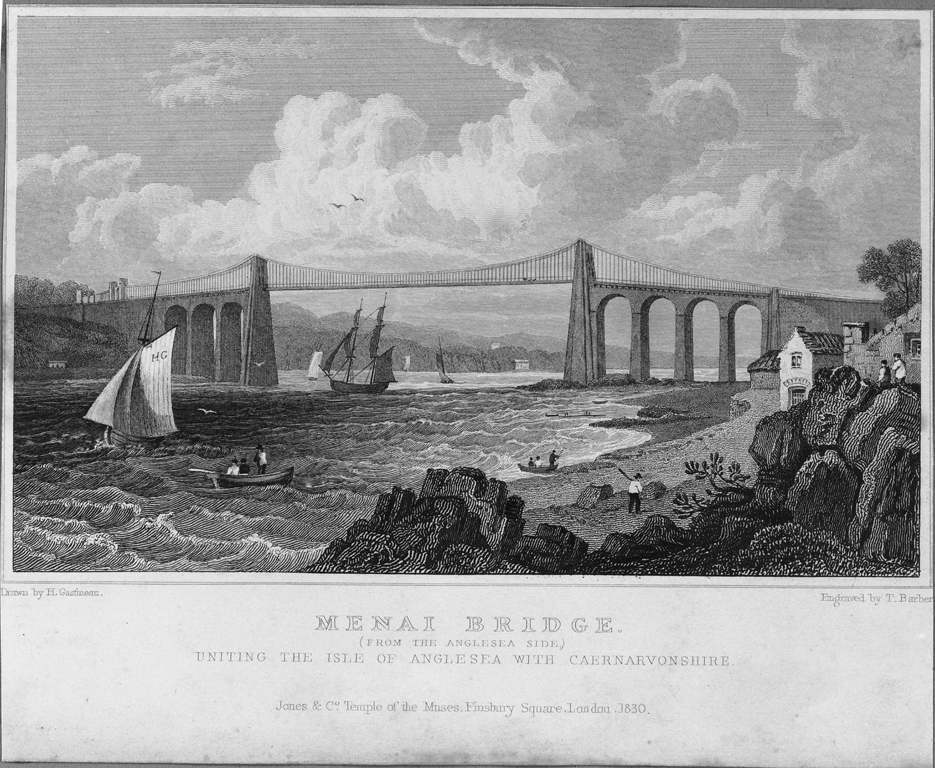
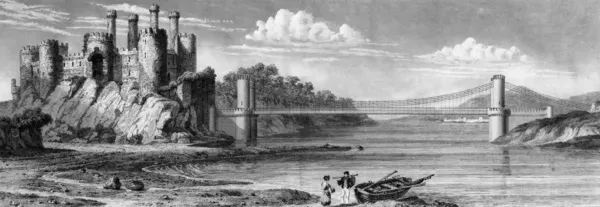
In 1826, the completion of the Telford roads and the Menai Bridge brought further significant changes. The Menai Bridge, in particular, became crucial for improving the link between England and Ireland for official Government documents and post, but also benefiting families like the Erskine's and other gentry folk who travelled regularly to Anglesey for events such as the annual Beaumaris Regatta and the Anglesey Hunt making the inconvenience of ferry travel a thing of the past.
Sir David Erskine attended the official opening of the Menai Bridge in January 1826, being the fifth carriage to cross,
“the carriage of Sir D. Erskine, Bart., late proprietor of the ferry, drawn by four elegant greys, decorated with ribbons” was part of the triumphal procession of the London and Holyhead mail coach and the officials’ carriages (Menai Heritage 2024; Tucker, 1953)
It is unknown if Lady Erskine attended, however with reference to the carriage it does suggest that Lady Erskine did indeed celebrate this most auspicious event.
Life at Pwllycrochon
1826 was a significant year for the Erskine family. In September of the same year, Lady Erskine gave birth to her daughter, Harriet, at Pwllycrochon, the family estate. At this time, Mrs. Elizabeth Roberts, Lady Erskine’s trusted former nanny, took on the role of housekeeper at Pwllycrochon. Mrs. Roberts had been with Jane from her earliest years and was now responsible for managing the large household, keeping the servants in line, and overseeing the day-to-day operations while the Erskine's travelled to cities like Liverpool, Chester, and London for an array of social gatherings and society balls.
Life at Pwllycrochon was busy. As a lady of Georgian society, Lady Erskine had a wide range of responsibilities, but she continued to focus on improving the new estate. Alongside her husband, she worked on the development of the estate's parkland and the planting of new woodlands, expanding the former ancient forest of Pwllycrochan in to picturesque woodland walks. Sir David's role as Deputy Comptroller and passion for shooting game had inspired him to establish a small shoot at Pwllycrochon, and they planted grouse and game cover in preparation for imagined future sport at the house, where they could entertain their aristocratic friends and extend beyond what the former squire's of Pwllycrochon had done before them with their small entertainments.
Ongoing developments and the payment finally of the much awaited compensation from the British government saw the Erskine's achieve a comfortable existence in north Wales.
References
https://menaibridges.co.uk/online-docs/Pring-1827.pdf
Tucker, N (1953) 'Colwyn Bay: Its origin and growth'


Comments
Post a Comment